
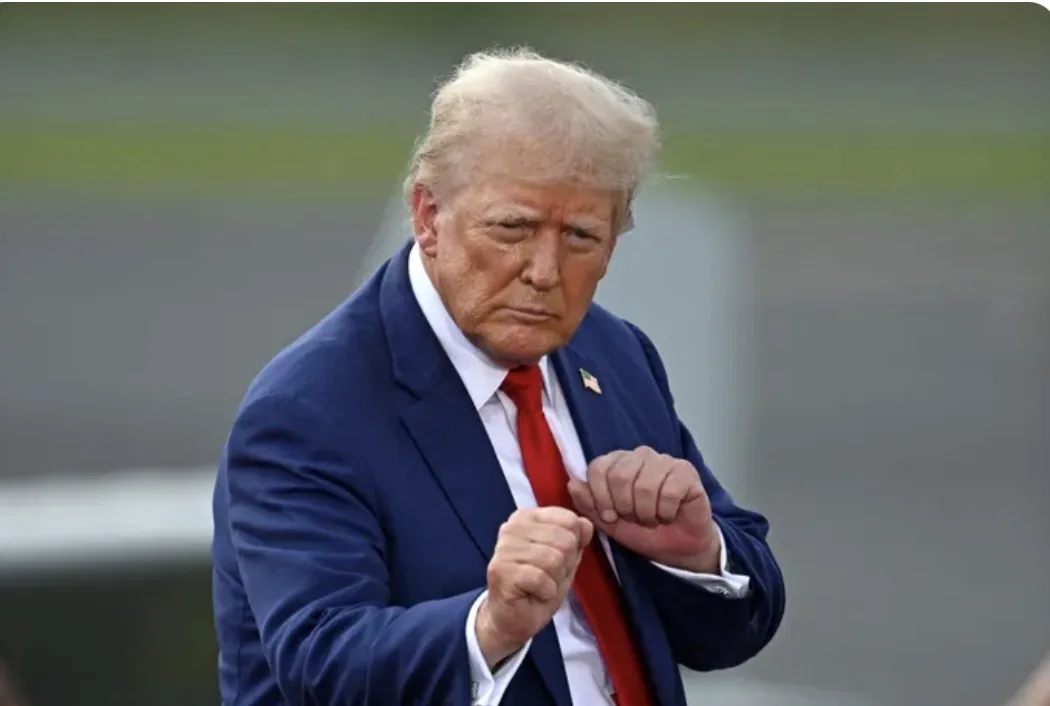
The Democrats' significant victory over President Donald Trump's Republican Party in the US midterm elections has reshaped the political landscape ahead of the 2028 presidential race.
The Republicans' disappointing performance has raised questions about the future of the party's leadership, particularly Vice President JD Vance, who had previously been considered a leading contender for the Republican presidential nomination. His close association with Trump could now become a political disadvantage as the party faces growing uncertainty.
Meanwhile, the Democratic victory has created opportunities for several emerging political figures, including Georgia Senator Jon Ossoff, whose growing popularity has drawn comparisons to former President Barack Obama.
Republicans Face Uncertainty
The Republican Party's midterm losses have weakened the political coalition that helped Trump secure victories in the 2016 and 2024 presidential elections. Consequently, potential successors within the party may face significant challenges in building support ahead of 2028.
Vice President JD Vance appears particularly affected by the outcome. Having actively campaigned alongside Trump in several key states, Vance now faces questions about whether his political future is too closely connected to the president's administration.
In response to the defeat, Vance attempted to distance himself from the outcome, attributing the Republicans' poor performance partly to public dissatisfaction with Trump's war in Iran. He shared his explanation in a lengthy statement on X on Wednesday.
However, separating his political identity from Trump's administration could prove difficult.
Other Republican figures whose names have emerged in discussions about the 2028 race include Secretary of State Marco Rubio, Florida Governor Ron DeSantis and Texas Senator Ted Cruz.
DeSantis, who previously challenged Trump for the Republican nomination in 2024, has become increasingly vocal following the election results. He described the Democrats' sweeping victory as a major political shock while highlighting Florida as one of the states where Republicans managed to maintain their position.
Cruz, who also contested against Trump in 2016, has not completely ruled out another presidential campaign. However, the Democrats' victories in Texas' Senate and gubernatorial races could present additional challenges for his political ambitions.
Democrats Gain Momentum Ahead of 2028
On the Democratic side, the midterm results have strengthened the position of several politicians who could potentially seek the party's presidential nomination in 2028.
Georgia Senator Jon Ossoff is among the prominent figures attracting attention. His successful re-election campaign has increased speculation about his possible presidential ambitions, although he has publicly stated that he has no interest in running for the White House.
Former Vice President Kamala Harris, who was previously considered a leading contender for the Democratic nomination, remains a possible candidate. However, some members of the party may prefer a fresh face following her unsuccessful presidential campaign in 2024.
Pennsylvania Governor Josh Shapiro has also strengthened his political standing after securing another victory in the important battleground state. Shapiro was previously considered by Harris as a potential running mate during the 2024 presidential election.
Another possible contender is California Governor Gavin Newsom, who has consistently criticised Trump's administration. Despite his national political visibility, questions remain about whether the Democratic Party will favour established figures or embrace a new generation of leadership.
New York Congresswoman Alexandria Ocasio-Cortez is also among the politicians who could enter the race. She previously indicated that she was considering a presidential campaign, although her potential candidacy could generate differing opinions within the party.
Other names being mentioned include former Chicago Mayor Rahm Emanuel, Illinois Governor JB Pritzker, Kentucky Governor Andy Beshear and Arizona Senator Mark Kelly, a former astronaut.
With the 2026 midterm elections altering the balance of political influence in the United States, attention is increasingly turning towards the next presidential contest. Although the potential candidates have not formally established their campaigns, the changing political dynamics suggest that both major parties could face significant competition as they prepare for the 2028 White House race.