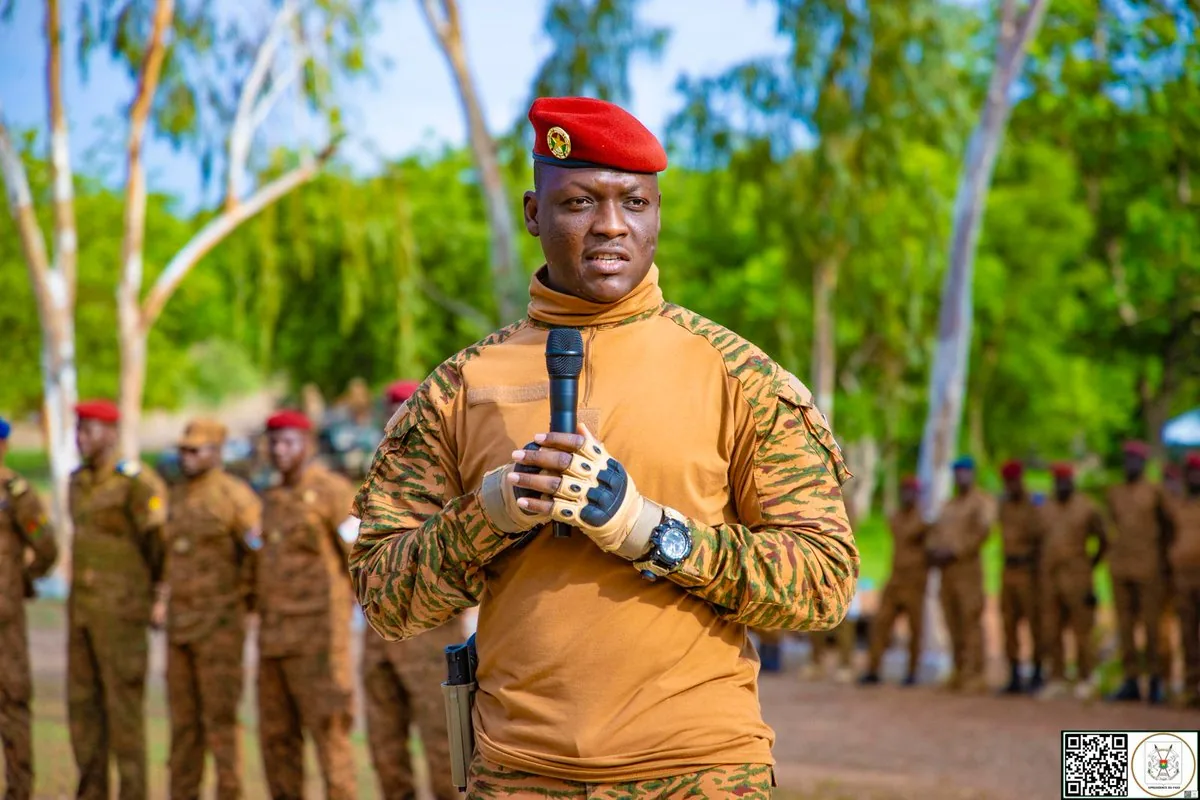
Since assuming power in 2022, Burkina Faso’s President Ibrahim Traoré has placed a clear emphasis on sports development, combining major infrastructure projects with stronger support for football at both elite and grassroots levels. His administration has accelerated stadium renovations and new builds, invested in coaching standards, and shown direct engagement with national teams and domestic competitions.
Infrastructure Upgrades
One of the most visible priorities has been modernising Burkina Faso’s football venues. The historic Stade du 4-Août in Ouagadougou had fallen into a condition that prevented it from hosting international matches. Under Traoré’s leadership, renovation works were accelerated, delivering improvements to the pitch, stands, changing rooms, lighting and other facilities.
In parallel, construction has progressed on the new Stade de Léguéma in Bobo-Dioulasso. The 15,000-capacity stadium is being built to modern standards and is expected to give the country another venue capable of hosting major domestic and international competitions.
Support for National Teams and Youth Development
Traoré’s involvement has extended beyond infrastructure to the national teams themselves. In August 2026 he received Burkina Faso’s U20 side after their success at the UFOA-B U20 tournament, which secured qualification for the 2027 U20 Africa Cup of Nations in Ghana. During the meeting he expressed concern about the conditions surrounding the young players and promised a different approach to supporting the national teams and developing the next generation.
Coaching and Professionalisation
The government has also focused on the people who shape the game. In July 2026 a programme was launched to raise the technical and physical-preparation skills of coaches working in the country’s top two divisions, as part of broader efforts to professionalise domestic football.
Personal Engagement
Traoré has demonstrated a personal interest in the sport. In May 2026 he attended the Coupe du Faso final at the Stade du 4-Août, where he interacted with the football community and watched the country’s premier domestic cup competition.
From stadium construction and renovation to coaching development, youth football and direct engagement with the national teams, Traoré’s time in office has seen the Burkinabe government take a more prominent role in the country’s sporting development.