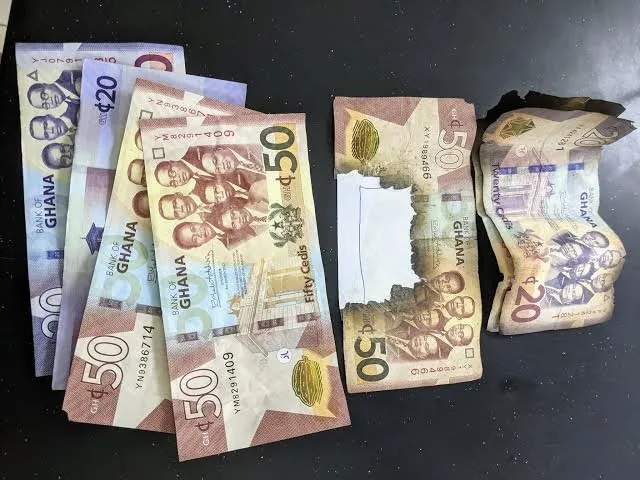
The Bank of Ghana has declared cedi notes that have been taped, glued, stapled, or otherwise repaired unfit for circulation, and told the public to stop patching damaged notes and putting them back into use.
The warning, issued on Wednesday, 7 October 2026, follows a video circulating on social media in which people repair torn and soiled notes with adhesive tape and treat the work as a business. The central bank said no one should repair, rejoin, or alter a mutilated banknote for re-issuance or recirculation.
“Banknotes that have been taped, glued, stapled or otherwise improperly repaired are unfit for circulation,” the Bank said in its release. It described the cedi as legal tender and a national symbol, and said homemade repairs undermine the integrity of the currency and disrupt how notes move through the cash system.
The practical risk is immediate. Improperly repaired notes can jam or damage ATMs and currency-processing machines. They can also be rejected at the point of payment or exchange, leaving the person holding them with a loss.
The Bank of Ghana said it alone manages the country’s currency. Anyone with a torn or mutilated note should take it to a commercial bank for examination and possible replacement under the Bank’s procedures, and should not try to fix it first. More than half of the original note must be presented.
The Bank also asked the public to handle cedi notes with care, and to report people repairing, rejoining, or mutilating notes to the Bank of Ghana or the police.