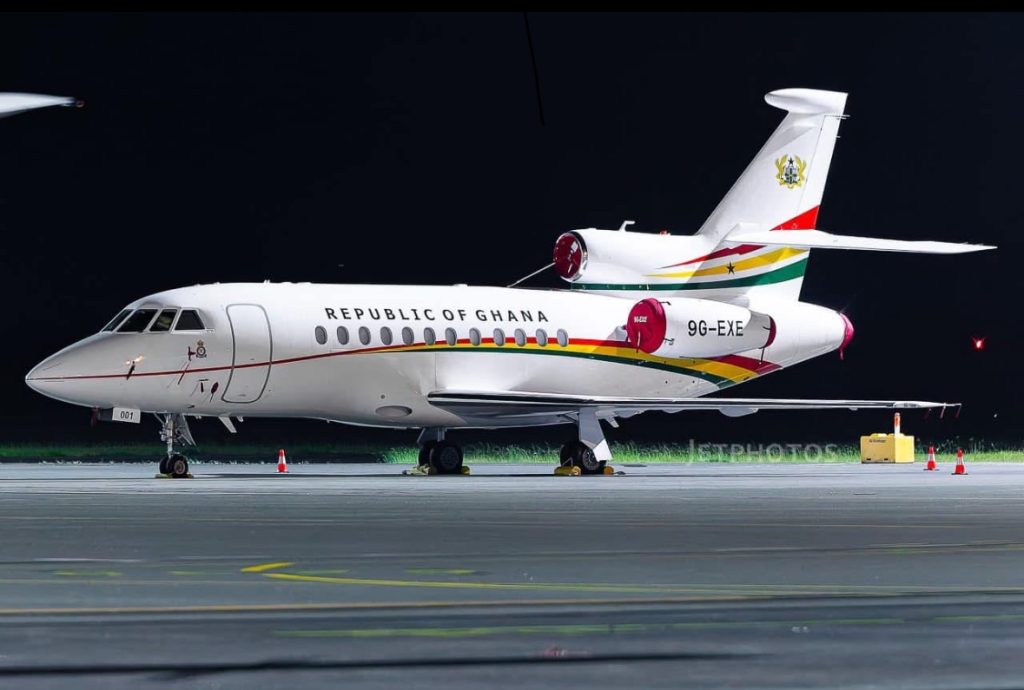
Ghana’s presidential jet has been officially grounded following the discovery of extensive corrosion and technical faults during a routine inspection, raising urgent concerns about the state of the nation’s ageing presidential fleet.
The aircraft, a Falcon 900EX EASy, registered 9G-EXE, was flown to Dassault Falcon Service (DFS) in Le Bourget, France, on March 11, 2025, for its scheduled 24-month inspection. What was initially expected to be a standard maintenance check quickly escalated into a major technical crisis.
According to reports , technicians at DFS uncovered serious corrosion affecting multiple critical components, including:
Left-hand fuel feeder tank – corroded Right-hand fuel feeder tank – corroded Both centre wing fuel tanks – heavily corroded Main fuel tank – corroded Turbofan – heavily corroded
The report notes that the corrosion in the feeder and center tanks presents a significant risk to engine function, and if left unchecked, could lead to midair engine failure — a scenario that would endanger the lives of passengers and crew.
The jet has reportedly been out of service for several months, and the findings have sparked renewed scrutiny of the safety and maintenance standards surrounding Ghana’s executive aircraft. As repairs and assessments continue, the presidency will likely be forced to rely on chartered aircraft or allied support for international travel.
The current state of the Falcon 900EX has reignited public and parliamentary discussions on whether Ghana should invest in a new presidential aircraft or further allocate resources to maintain the aging jet. Either decision comes with weighty political and financial implications.
As of now, no official government statement has been issued detailing the cost or timeline for the jet’s return to service.