In recent years, Ghana and Ukraine have drawn strikingly closer on the world stage. Ghana has taken a clear stand in support of Ukraine — voting at the United Nations to condemn Russia’s invasion, and even hosting a session of the Crimea Platform, a major diplomatic effort backing Ukraine’s territorial integrity. Ukraine, in turn, has recognized Ghana as “one of its most important and promising partners in West Africa.”
This evolving partnership spans multiple areas — from agriculture and education to digital technology. Through initiatives like “Grain from Ukraine,” Kyiv emphasizes its commitment to global food security and increasingly sees Ghana as a valued ally in that effort.
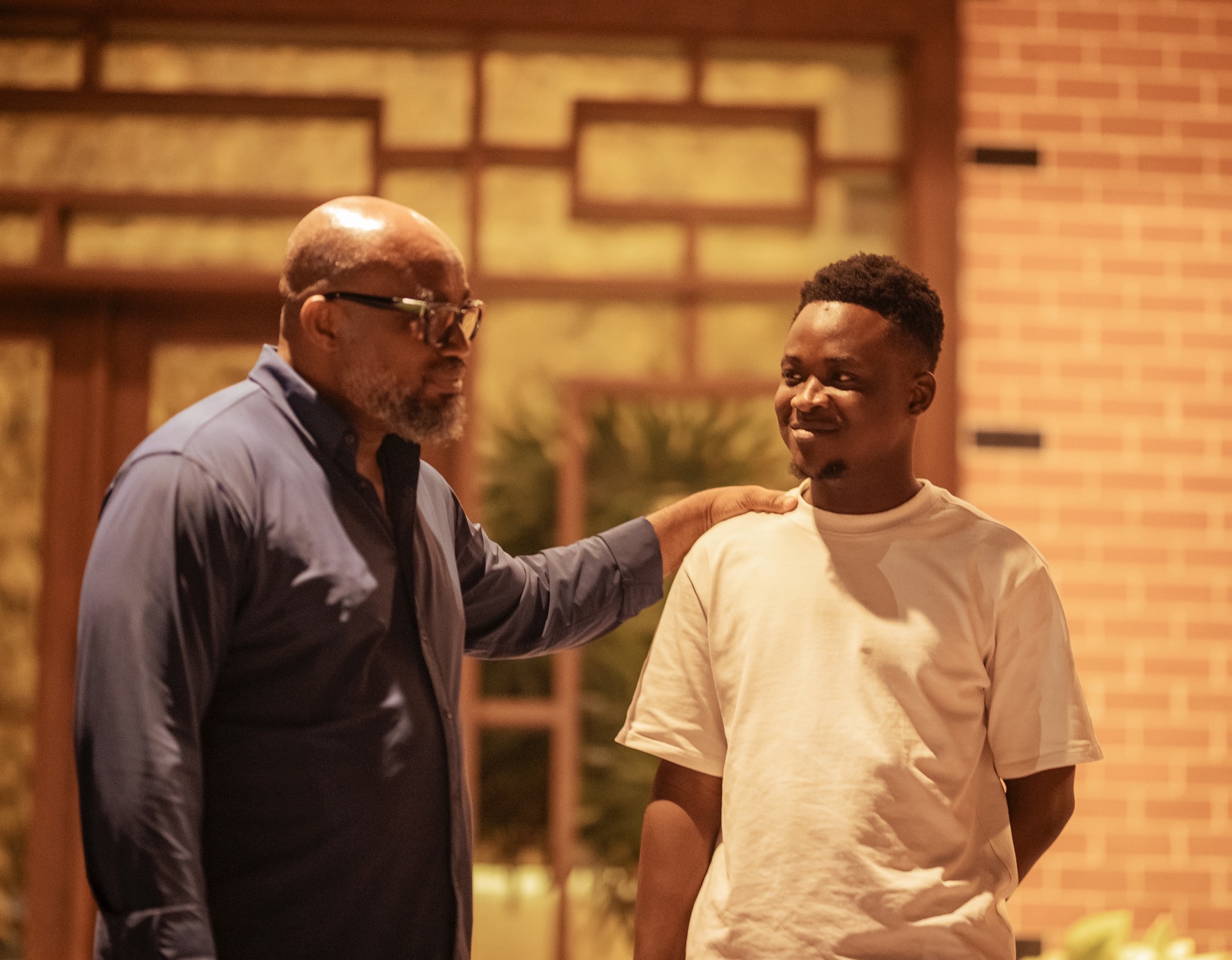
But now, one deeply personal case threatens to test this bond: the detention of Joshua Nkrumah, a Ghanaian civilian caught up in the chaos of war.
A Civilian Trapped in a Foreign War
Joshua Nkrumah’s story remains partly unclear, but his family insists on one point: he is not a combatant. According to loved ones in Accra, he never picked up arms, never enlisted, and was simply in the wrong place at the wrong time.
For eight agonizing months, his family had no idea what had become of him. They feared the worst. Then, suddenly, came a phone call: Joshua was alive, but imprisoned in a Ukrainian detention center.
His wife, mother, and young son continue to suffer. A father is missing from his son’s life. A mother wakes each day without answers. His family — and human rights advocates in Ghana — have called on both governments to act, reminding the world that Joshua is a civilian whose detention is not just unnecessary, but unjust.
Human Rights Concerns and Racial Disparities
Joshua’s case also raises wider human rights questions. A UN-facilitated study (reported by The Kyiv Independent) found that around half of the prisoners held by Ukrainian forces reported beatings or torture during capture. Some were kicked, beaten, or even subjected to electric shocks — violations of international humanitarian law and the Geneva Conventions.
Even more troubling are reports that African prisoners have faced additional abuse — including racist taunts, slurs, and dehumanizing behavior. In one viral video, a Black detainee was mocked as a “monkey” and offered a banana by laughing guards — a horrifying display of racism that many condemned as inhumane and unacceptable.
While these incidents do not represent official Ukrainian policy, they reveal that African captives like Joshua may be doubly vulnerable — facing both the hardships of detention and the sting of racial abuse.
The Case for Compassion and Release
Ukraine has conducted thousands of prisoner exchanges during the war, often involving high-profile POWs. These gestures are meant to reinforce a commitment to human rights and goodwill even in brutal times. Ghanaian commentators are now asking: Why not include Joshua in such a humanitarian release?
His case is not just about international law — it’s about basic humanity.
Releasing Joshua Nkrumah would send a powerful message: that Ukraine not only defends its sovereignty, but also respects the rights of innocent civilians — especially those from friendly nations like Ghana.
A Chance to Strengthen, Not Strain, a Growing Friendship
Ghana and Ukraine are at the beginning of what could be a historic partnership. But as this relationship grows, it must be grounded in mutual respect, transparency, and compassion.
Joshua Nkrumah’s continued detention threatens to complicate this bond — but his release could deepen it.
For a family in Accra, it would mean peace. For Ghana, it would show that its support for Ukraine is honored. And for Ukraine, it would reinforce its image as a defender of justice — even amid war.
Let Joshua Nkrumah’s story not be forgotten. Let it be resolved — with dignity, and with humanity.