


Global oil prices are always a bit of a rollercoaster, but the impact of high gasoline costs in Africa is particularly harsh. The continent’s economic vulnerability and heavy reliance on fuel for essential industries make it especially susceptible to price shocks at the pump.

The ripple effect of high fuel prices is far-reaching. Increased transportation and manufacturing expenses hit everyone, from individuals to small businesses. In Nigeria, for example, where fuel prices are hovering between ₦860 and ₦900 per liter as of early May 2025, the average person feels the squeeze on everything from food to public transportation. Small businesses, especially those in logistics, agriculture, and retail, see their already thin margins shrink, often forcing them to raise prices – a burden ultimately borne by the consumer. The cost of moving goods skyrockets, impacting the prices of everything from market produce to construction materials.
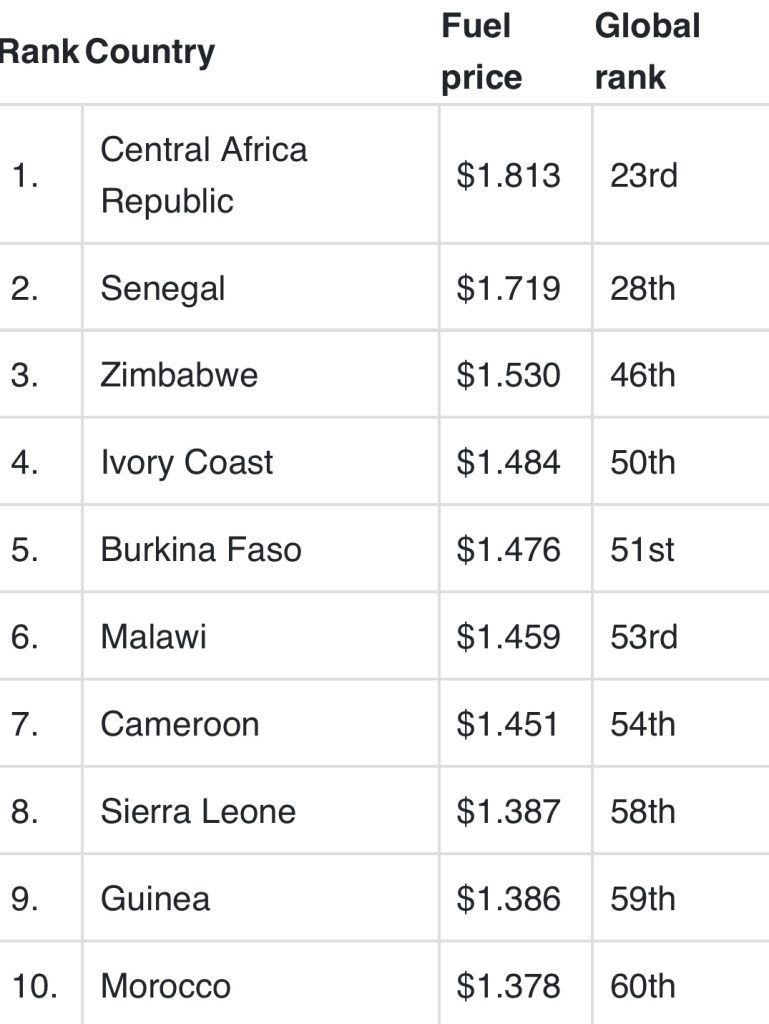
According to data from Global Petrolprices, fuel prices in Senegal, Ivory Coast, Burkina Faso, Malawi, and Cameroon have all seen slight increases this month. On the other hand, fuel prices in the Central African Republic and Zimbabwe have dipped slightly, while Sierra Leone and Guinea have remained stable. One notable change this month is that Morocco has replaced Seychelles in the top 10 list of African countries with the highest fuel prices. Last month, the global average was $1.25 per liter, which has now risen to $1.26 per liter.